

How I Use Artificial Intelligence as a Designer
Artificial intelligence as a development to embrace
A powerful, recent and already essential tool
Artificial intelligence is a powerful, recent and already essential tool. To do without it, or not seek to master it, is, in my view, a mistake. In a field such as design, this transformation must be understood, mastered and integrated with discernment. That is why I train continuously, in order to remain at the forefront of graphic trends, technologies and tools that are reshaping the creative professions.
Artificial intelligence in support of my work as a designer
Tools in support of art direction
I use artificial intelligence as a creative and strategic lever in support of my work as a designer. Tools such as ChatGPT and Claude help me structure ideas, clarify messages and accelerate certain stages of reflection, while Midjourney, ChatGPT Image 2, Runway, Seedance 2, MusicGPT and ElevenLabs allow me to explore visual, audio and narrative directions more quickly.
But the tool replaces neither the eye, nor selection, nor decision-making: art direction, visual standards and final coherence remain at the heart of my approach.
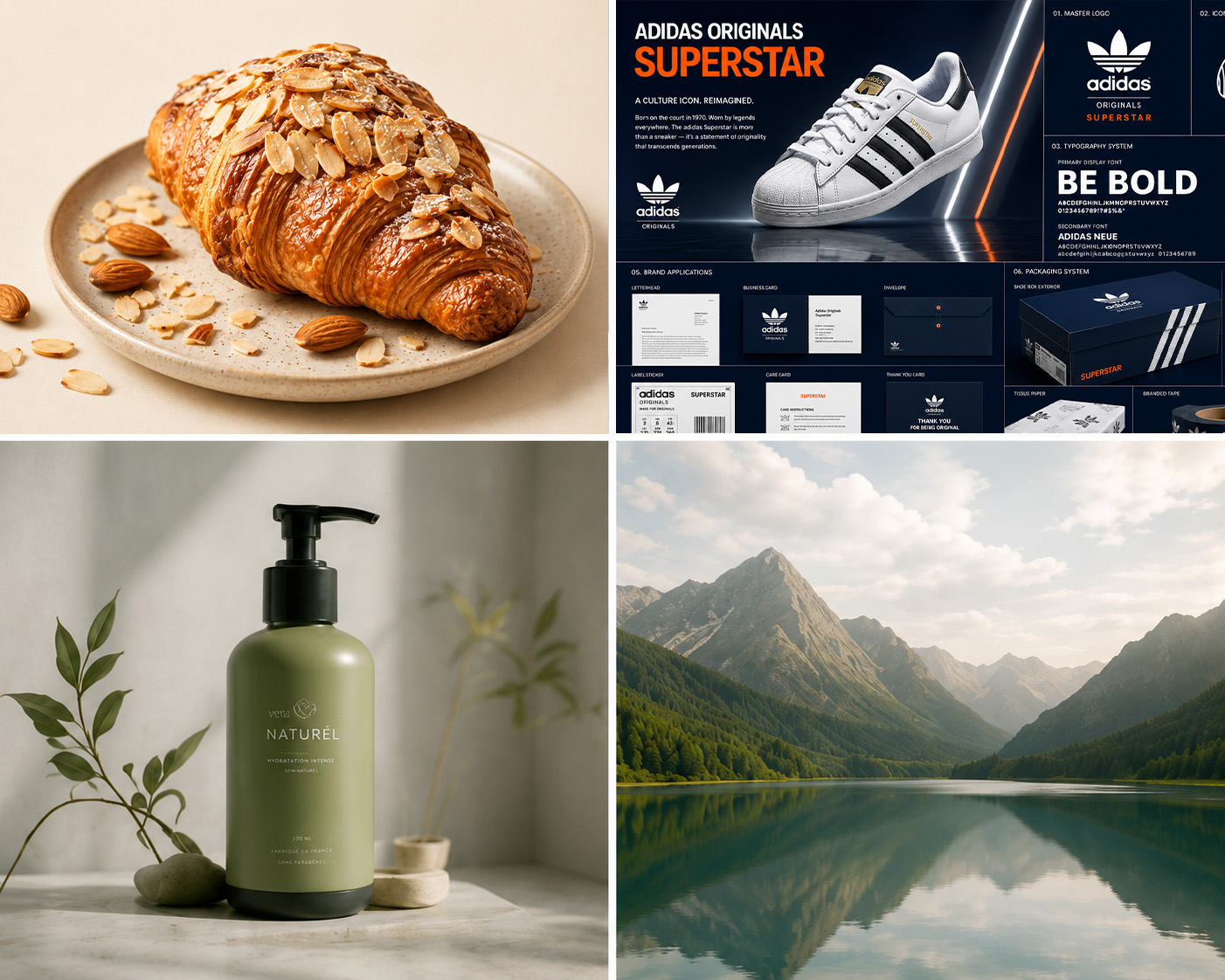
AI as a visual exploration tool
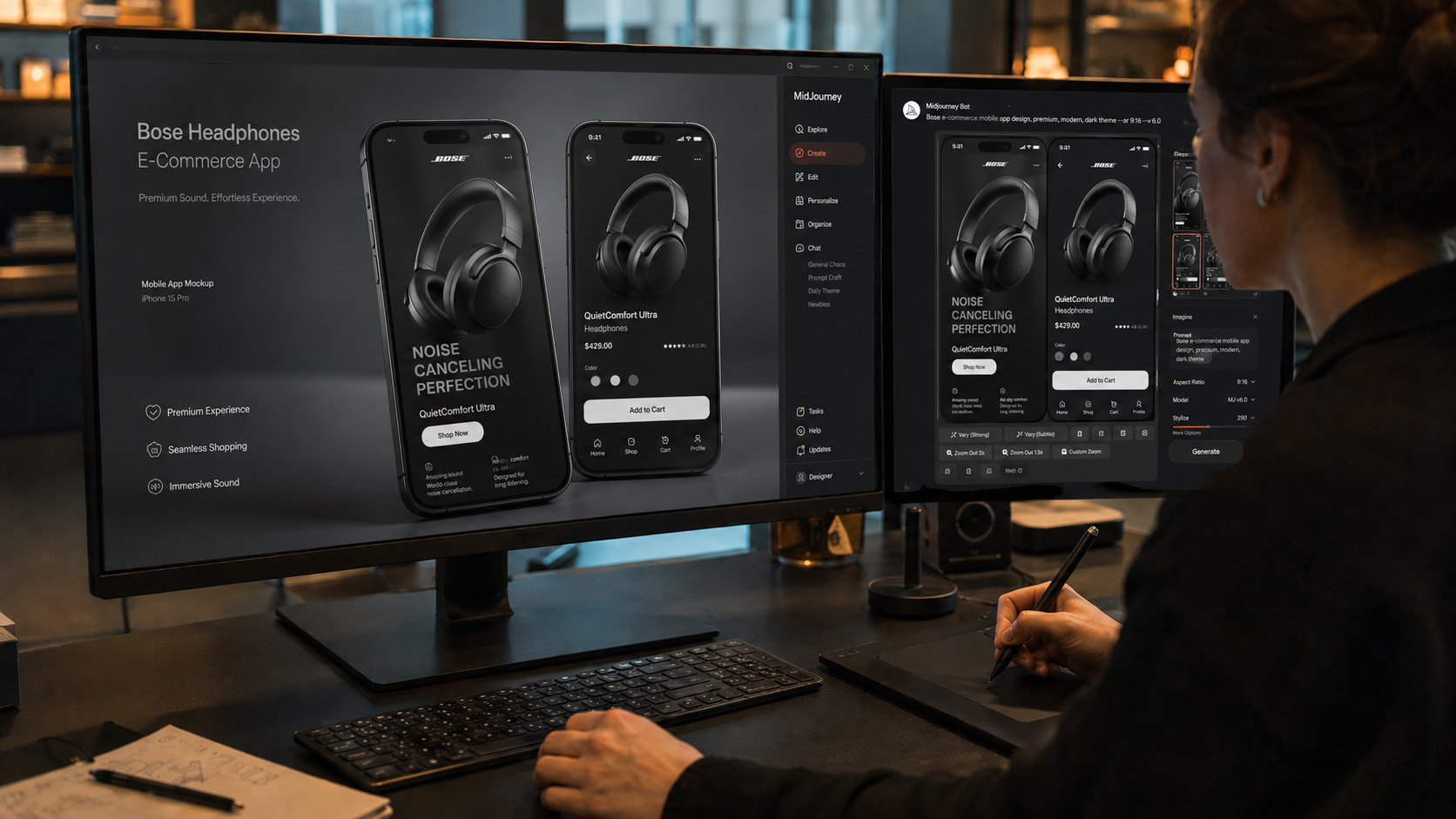
Transforming an intention into an image
For image work, I use Midjourney and ChatGPT Image 2 in particular to develop visual directions rapidly, test atmospheres, create compositions and explore several graphic routes before selecting one.
These tools become particularly useful when building a visual universe, preparing presentation visuals, producing illustrations or refining an idea before execution. In this context, AI acts as an ideation accelerator in support of graphic coherence. My role is then to select, correct and direct these options so they align with a clear graphic intention and a coherent visual identity.
Prompt engineering in my creative method
Describing with precision to create with accuracy
Prompt
Scene: mock-up of a beauty mobile application showcasing a premium haircare range in a bright, pink, cosmetic environment.
Angle: front-facing view of the mobile application.
Lighting: soft, diffused, bright, with subtle reflections.
Materials: glass, glossy plastic, cosmetic liquid, smooth surface.
Atmosphere: feminine, premium, polished, fresh.
Art direction: elegant, cosmetic, modern.
Final use: UX/UI project presentation for a beauty e-commerce application
Prompt engineering is an integral part of my working method, whether I am using ChatGPT and Claude to structure a complex request, or Midjourney, ChatGPT Image 2, Runway and Seedance 2 to translate an intention into an image or a sequence. It is not simply about writing an instruction, but about defining composition, angle, lighting, material, level of realism, atmosphere, art direction and the final use of the visual with precision. This allows me to obtain results that are more coherent, more controlled and better aligned with the identity of a project.
Artificial intelligence in video creation
From concept to motion
For video, I use AI to transform an idea into coherent visual sequences. This involves defining the scenes, rhythm, atmosphere, movement and, at times, using reference images to preserve visual continuity.
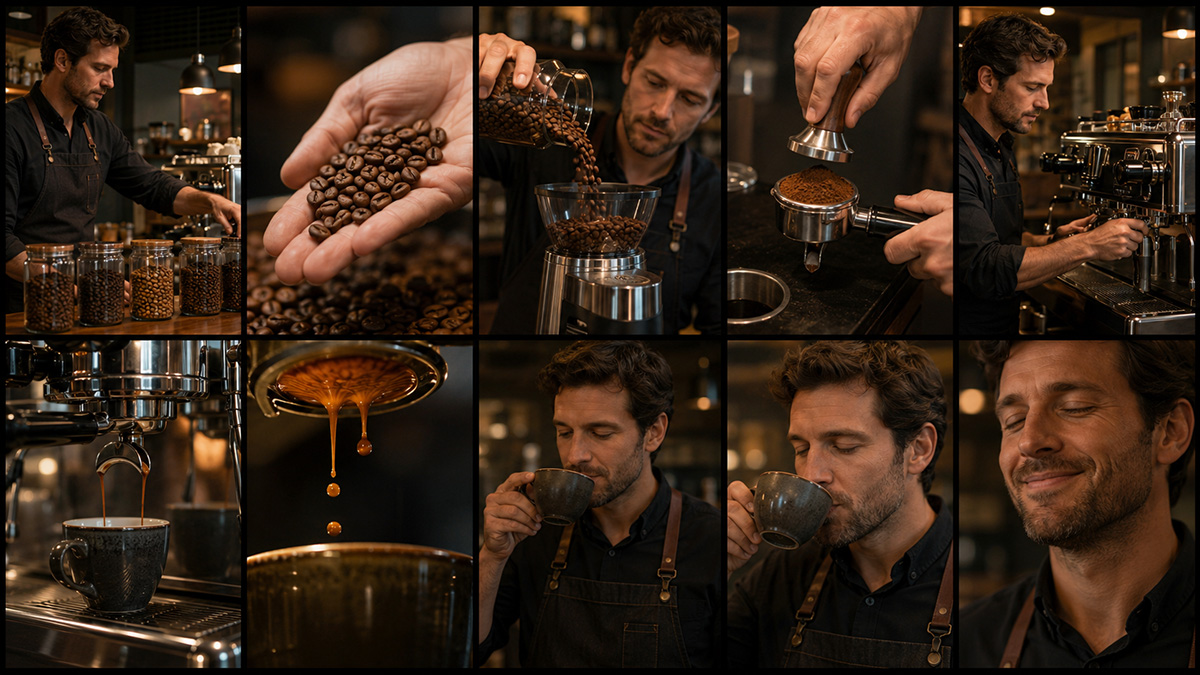
This approach enables me to design conceptual videos, visual demonstrations and narrative sequences more quickly, all coherent with an artistic direction, a message and a communication objective, while maintaining a clear intention at every stage.
For video, I mainly use Runway and Seedance 2 to transform an idea into coherent visual sequences.
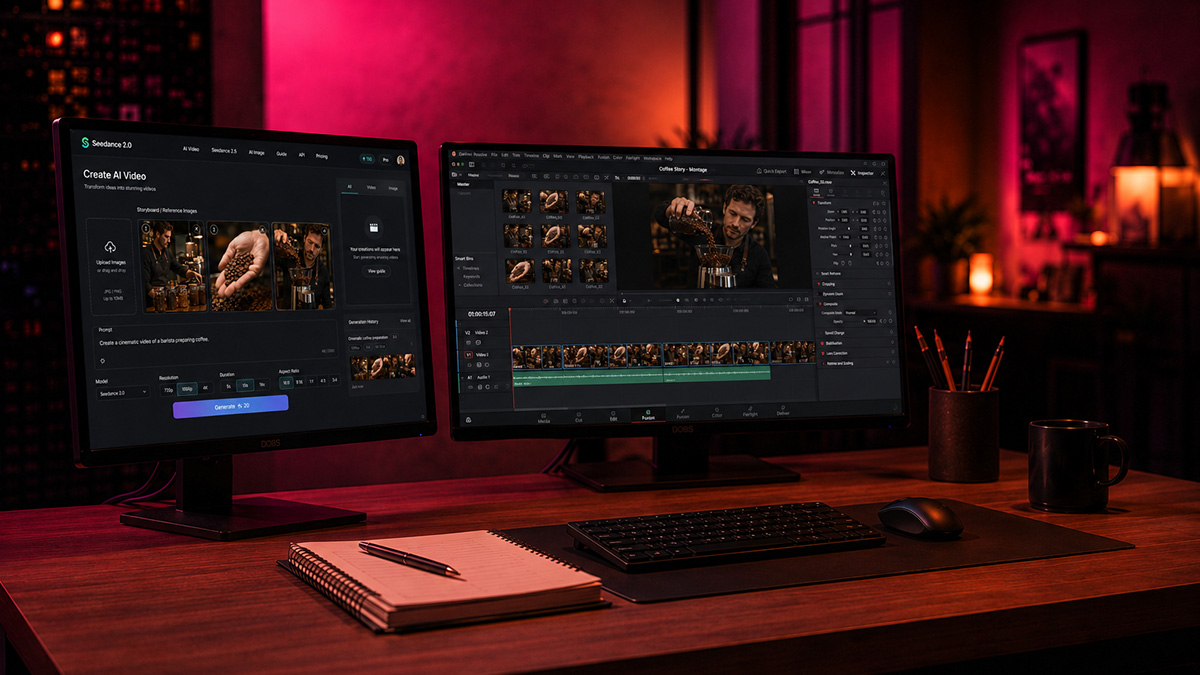
This involves defining scenes, rhythm, atmosphere and movement, and sometimes using reference images to preserve visual continuity.
This approach allows me to design conceptual videos, visual demonstrations and narrative sequences more quickly, in line with an art direction, a message and a communication objective, while keeping a clear intention at every stage.
Why AI does not replace the designer
The tool accelerates, the eye decides
Artificial intelligence does not replace reflection, experience or art direction. Whether one uses ChatGPT, Claude, Midjourney, ChatGPT Image 2, Runway, Seedance 2, MusicGTP or ElevenLabs, the tool speeds up certain stages, opens up possibilities and facilitates iteration, but the relevance of a result still depends on the designer’s eye, selection, framing and decisions.
The real difference does not come from generation speed, but from the ability to choose, correct, prioritise and give the right direction to the final result.